Division of Biology and Medicine
Center for Global Health Equity
Date
April 7, 2026
Medical Student's Global Health Innovation Wins Brown Venture Prize
This World Health Day, CGHE is highlighting Saajan Patel MD '29 and his team at Che Innovations who were awarded 1st place at the 2026 Brown Venture Prize for their global health innovation, NeoNest: a low-cost transport infant warmer designed from locally available Ugandan materials. Developed to address preterm hypothermia during transit, NeoNest is built upon community insight and international collaboration.
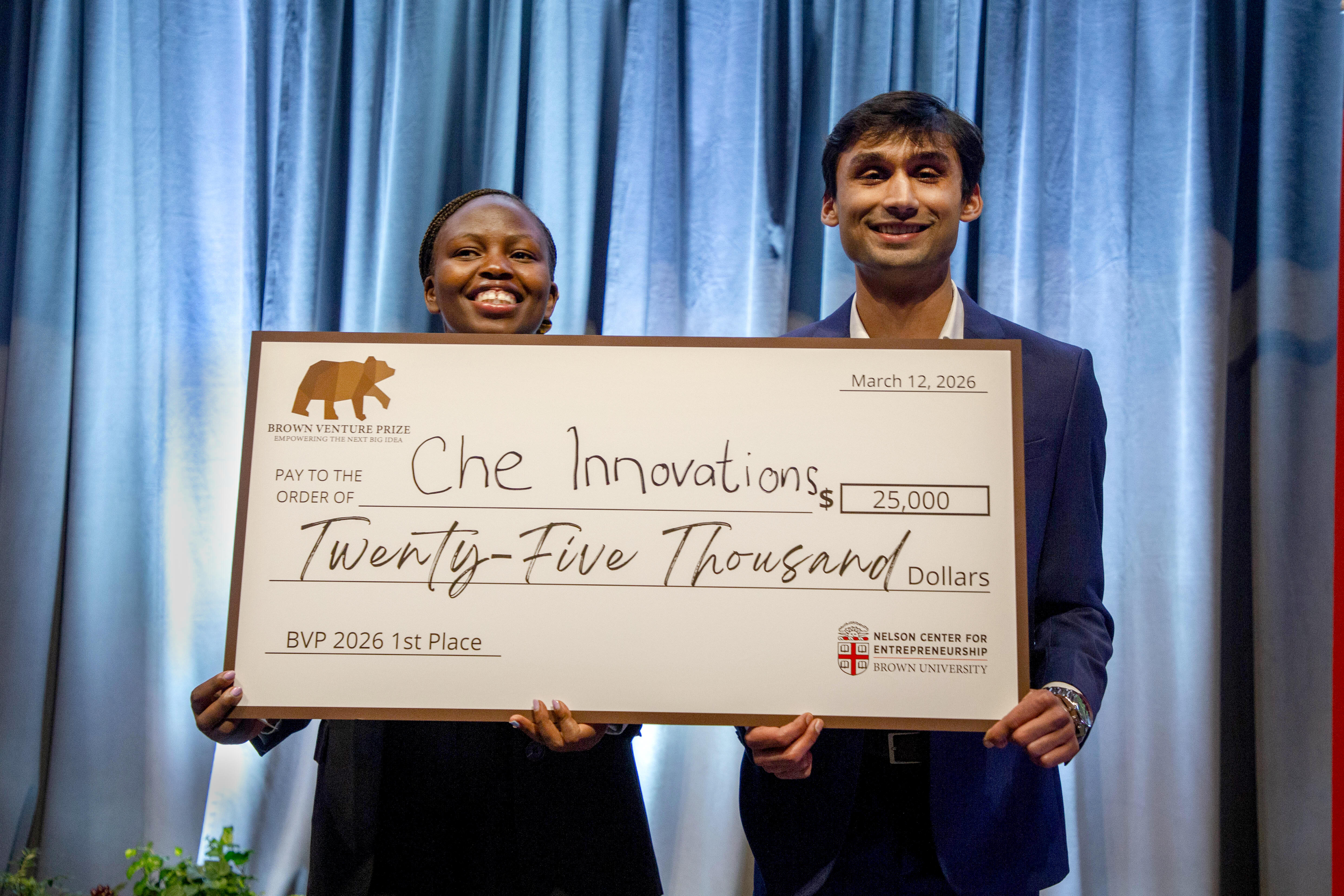
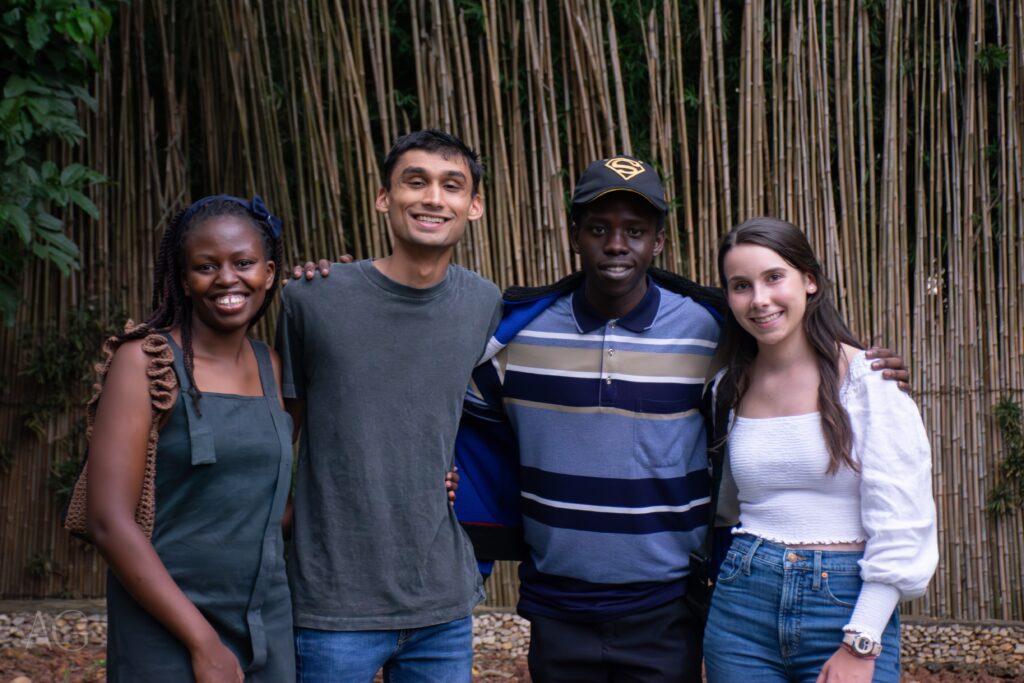
Saajan and his team were awarded the Brown Venture Prize for their innovation called NeoNest. Their journey began in June 2023 when co-founders Saajan, Sophia (mechanical engineer, Duke), Vivian Arinaitwe (biomedical engineer, Uganda), and Joseph Okileng (biomedical engineer, Uganda) met through the Duke–Makerere Biomedical Engineering Fellowship, an eight-week cultural engineering exchange in Kampala, Uganda. During their time at Kawempe National Referral Hospital, the team conducted ethnographic interviews with healthcare workers, ambulance drivers, and procurement officers.
From the interviews, they found that hypothermia, specifically among preterm infants in transit from rural Ugandan villages to national referral hospitals, was one of the largest challenges healthcare workers in Uganda faced.
An ambulance driver shared that the only way to keep infants warm was by wrapping them in bags of hot water. This insight inspired NeoNest: a portable infant warmer made from common Ugandan household materials, like a jerrycan, a container Ugandans use on a daily basis. The prototype was built within a shipping container reconditioned from a makerspace (Makerere University’s Design Cube) in Kampala and has evolved into a clinical-ready device now ready for pilot testing.
“ We believe we are helping create a path for other local biomedical innovations to go from ideation in Uganda to market ”
Under guidance from advisors Ann Saterbak (professor of the practice biomedical engineering, Duke) and Robert Ssekitoleko (Head of biomedical engineering, Makerere University), the NeoNest team has achieved substantial momentum.
They have become a fully incorporated private limited company in Uganda, now headquartered in Kampala, secured over $100,000 in non-dilutive grant funding and won 13 global design awards, including the Rice360 Institute of Global Health Technologies Competition, African Business Concept Challenge, Transforming African Medtech Conference, and recognition as a finalist for the Africa Prize for Engineering.
As the team awaits clinical approval for the NeoNest, they also have an accessory product, the Che Nest, a neonatal embrace for existing infant warmers, implemented in 18 Ugandan hospitals. Che Nests help prevent cross infections for infants placed within these existing infant warmers. Currently they serve more than 100 newborns every month and have allowed the team to build and maintain relationships with hospital directors, NICU leads and procurement officers who will later purchase NeoNest. Funded by a grant from London’s Royal Academy of Engineering, in February, the team hosted a stakeholder conference bringing together leaders from Uganda’s Ministry of Health, National Drug Authority, and biomedical engineers to develop a feasibility framework for future medtech innovation in low-resource settings.
.jpg)
Even beyond technological success, NeoNest embodies the values of global health equity. The World Health Organization estimates that up to 80% of medical equipment in low-resource settings is donated where most end up in “equipment graveyards” after breakdown and some are even rarely used, often because the devices are not designed with local contexts in mind. NeoNest challenges that model: it is built by Ugandan engineers, informed by Ugandan clinicians, and sourced from Ugandan materials, creating a sustainable innovation that can be conducted locally. Their plan is to become one of the first locally manufactured devices to enter Ugandan clinical trials.
“ We envision a future where global health technology can be built, manufactured, and sold directly to the communities it was designed to help ”
With Vivian from rural West Uganda, Joseph from rural East Uganda, and Saajan and Sophia from the United States, NeoNest has transcended cultural barriers, exemplifying the power of global health collaboration through diversity, creativity, and innovation. Patel says NeoNest wouldn’t be where it is today without the immense amount of work of his team. Vivian now leads Che Innovations full-time, where she is one of the few female biomedical engineers helping pave the way for locally sourced medical solutions in Uganda, while Sophia manages NeoNest’s engineering and regulatory team at Duke. Joseph was awarded a fully-funded masters degree at the University of Pisa, Italy to study biorobotics through his work building NeoNest. Today, Joseph leads NeoNest’s technical (design & engineering) and manufacturing team.“We started as randomly assigned teammates,” Saajan shares, “but now we’re lifelong friends excited to see where the future takes us.”