Division of Biology and Medicine
Center for Global Health Equity

Community Spotlight: Meet Yui Miura ‘26, Global Health Scholar and Future Pediatric Surgeon

Meet Yui Miura ‘26 from Tokyo, Japan, who hopes to turn her dedication to helping children into a career in pediatric surgery.

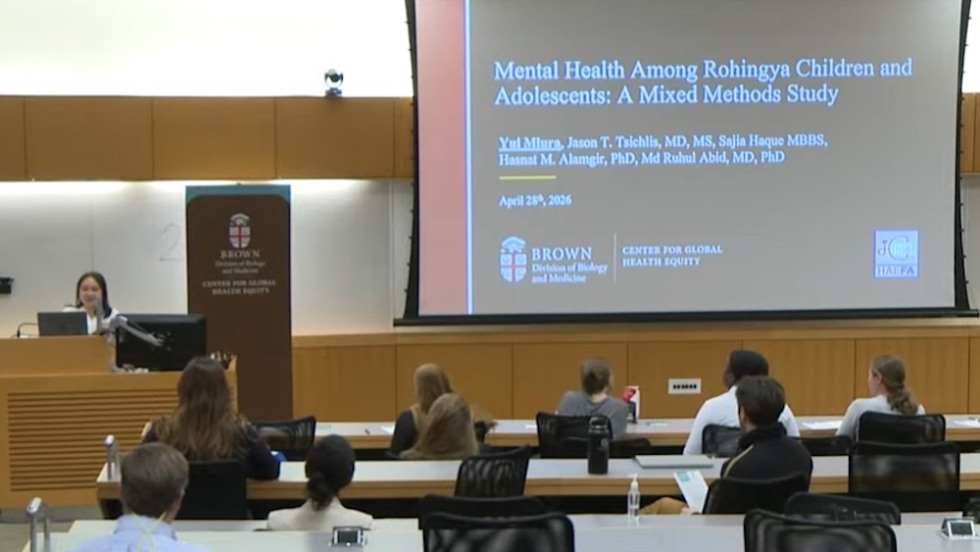
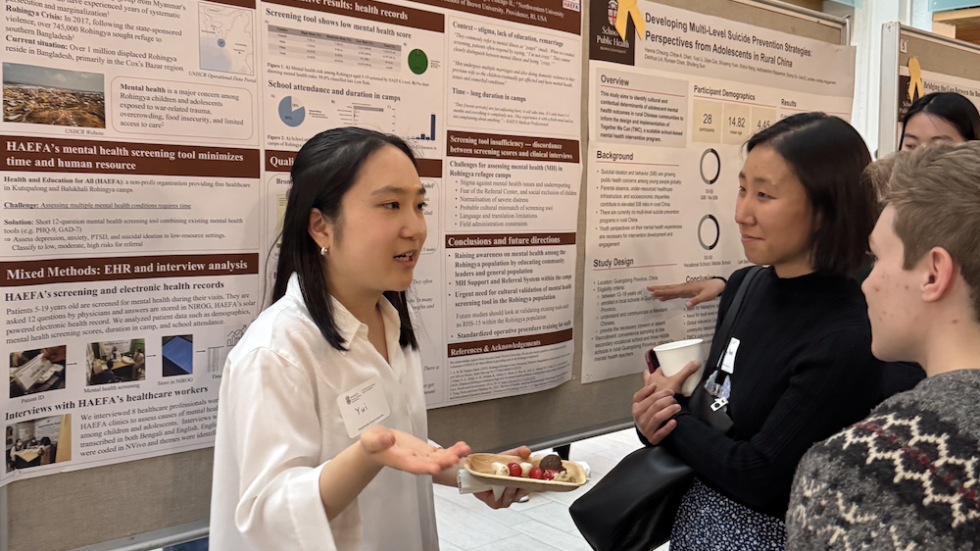
Miura, who studied Biology (Biotechnology and Physiology) at Brown, has collaborated extensively with Dr. Ruhul Abid and his non-profit organization, Health and Education for All (HAEFA), which provides free healthcare and education primarily to Rohingya refugees in Bangladesh. She is a recipient of the Swearer Center Abelardo Hernández Community Engagement Award for her commitment to HAEFA and Brown Refugee Youth Tutoring and Enrichment (BRYTE), a student-led organization pairing Brown students with K-12 refugee students in Providence. Miura also won Best Global Health Abstract for her work on mental health among Rohingya children and adolescents at the 2026 CGHE Global Health and Equity Symposium. 

Miura received the Betsy Amanda Lehman ‘77 Memorial Award for Excellence in Journalism from the Department of English at Brown for her article on twin to twin transfusion syndrome (TTTS), published on Medicine@Brown and Health Discoveries@Brown. She is also a recipient of the 2026 Morris L. Povar Prize in Zoology and Physiology and the 2025 Maria L. Caleel Biology Research Fellowship for her work investigating microparticles for applications in drug delivery in the lab of Dr. Eric Darling.

What inspired your interest in medicine and global health?

I first became interested in how social determinants affect health when I volunteered at a community center, cooking and serving meals to underserved children in my neighborhood in Tokyo. I learned how education, family environment, and nutrition can all shape a child's future. I became interested in serving children from diverse communities and backgrounds, which led me to study abroad in the US at Brown.

It wasn't until I came to Brown and took the course Introduction to Medical Illustration (PLME 0400) that I became certain I wanted to pursue medicine. The course was taught by Dr. Francois Luks, a pediatric surgeon who became my mentor. During the course, I visited the operating room and was fascinated how a surgeon's knowledge and hands could save a child's life and allow them to be there for them as they grow up. Even after the course ended, he was kind enough to let me observe his surgeries and outpatient clinical hours. I learned that caring for a child requires not only treating diseases but also addressing multiple factors affecting their health, including family, home environment, social support, and education. I was inspired by the many ways a pediatric surgeon could impact a child's life, and this experience sparked my interest in medicine.

How did you first become involved in research with Dr. Ruhul Abid, and what drew you to his particular research topic?

I started working with Dr. Ruhul Abid at the beginning of my sophomore year. During my freshman year, I began volunteering as a tutor with the Brown Refugee Youth Tutoring and Enrichment (BRYTE) and continued working with a Syrian refugee family near Providence throughout my years at Brown. While tutoring, I became very close with my 5th grade student and her family and learned about the unique challenges refugees face, including language and cultural barriers, educational barriers, and challenges related to identity. I became interested in learning more about refugee communities around the world. That was when I found Dr. Abid and his organization, Health and Education for All (HAEFA), a nonprofit that provides free healthcare and education to underserved communities primarily in Bangladesh, with a focus on Rohingya refugees.

I first became involved with HAEFA as a member of the editorial team, helping to publish the organization's annual reports for three years including serving as chief editor in 2024. As I learned more about the Rohingya, I became interested in becoming more involved through another approach, through research.

Tell us more about your work with Dr. Abid and HAEFA.

The Rohingya are an ethnic minority group from Myanmar who have faced decades of discrimination and persecution and have been denied citizenship in their own country. Today, many Rohingya live in refugee camps in Cox's Bazar, Bangladesh, where they face numerous health challenges. HAEFA provides healthcare through two clinics in the camps. I have been involved in two main projects with HAEFA: one focused on malnutrition among Rohingya children and the other on mental health among Rohingya children and adolescents.

The malnutrition project, led by Jason Tsichlis MD’21, involved analyzing HAEFA's electronic health records from the past seven years. We found that many children are malnourished and that rates of malnutrition have continued to increase over time since the crisis escalated in 2017. We also examined how inflation and the purchasing power of foreign-aid e-vouchers are associated with children's nutritional status. We published this work in July, and our goal is to raise awareness of the severity of the crisis, encourage more research in this area, and reach policymakers and stakeholders who can develop targeted interventions.

The second project focuses on improving mental health assessment in the [refugee] camps. Rohingya children have experienced violence, loss of family and home, dangerous journeys to Bangladesh, and ongoing uncertainty about their security and future. However, there is currently no assessment tool for children and adolescents that has been validated specifically in the Rohingya population and can accurately measure their well-being to guide appropriate interventions. I conducted a mixed-methods study that combined analysis of electronic health record data with interviews with healthcare workers from my fieldwork in the refugee camps. Our goal is to culturally and linguistically adapt a mental health screener for the Rohingya population and validate it among Rohingya children and adolescents. This would allow HAEFA to better identify children and adolescents experiencing mental health concerns and connect them with appropriate further care. 

What have been the most interesting and challenging aspects of this work?

The mental health project has been both interesting and challenging because mental health can manifest in many different ways and can be understood differently across cultures. Language, religion, and social perceptions of mental health can all influence how mental health is understood and expressed. For example, in the Rohingya language, there are no direct translations for some Western mental health terms, such as depression or anxiety. Mental health can also be stigmatized within the community, which can make it difficult for children to express their feelings. This has shown me that simply translating an assessment tool is not enough. The questions also need to be adapted to the cultural and linguistic context to ensure that they accurately capture what we are trying to measure.

It has also been a very meaningful and humbling experience to work with the HAEFA staff in Bangladesh. They have worked firsthand with the Rohingya community and have taught me so much. Their dedication to improving the lives of the Rohingya community has been really inspiring to me.

How has your work with Rohingya refugees shaped your perspective on the intersection between medicine and health equity? How do you hope to carry these lessons into your future career?

My experience working with the Rohingya community has taught me to approach medicine, treatments, and medical technologies through a social lens. I learned that medical care has to work with what is possible in a community, and that can differ in between communities and even between patients. For example, for a malnutritioned child in the camps, we can't simply tell the parents to improve the child's diet when available food rations are beans, rice, and oil. Similarly, we can't prescribe medications for hypertension or diabetes when there is no stable supply, or recommend running to increase exercise when the camps are overcrowded. I want to keep in mind to first understand the patient and their community before thinking about how to best treat them in any setting I will practice.

I was also able to bring the lessons back to my biology research on microparticles for intravenous drug delivery. In the lab, I was pursuing novel technologies, but it made me ask questions like, how can we make this technology accessible in low-resource settings? How can we design microparticles that can maintain stability even in places where fridges are not available, or where human resources with high expertise is limited? It has been exciting to see these two interests intersect, and I hope to continue exploring how medical technologies and treatments can be developed or adapted in low-resource settings.

Most importantly, the experience has taught me that medicine goes beyond treating disease and can be a source of hope. When I visited the camps, I saw how the disruption of education or employment and the constant uncertainty affected people's sense of hope. I saw how HAEFA workers were not only there to provide them medical treatments, but to show that they care for them. I want to carry these lessons in my future career as a doctor, remembering that showing empathy and listening to patients can make a difference in a patient's life. I want to provide a sense of support and hope, even if it is just a little bit. 

What advice would you give to students who are interested in global health?

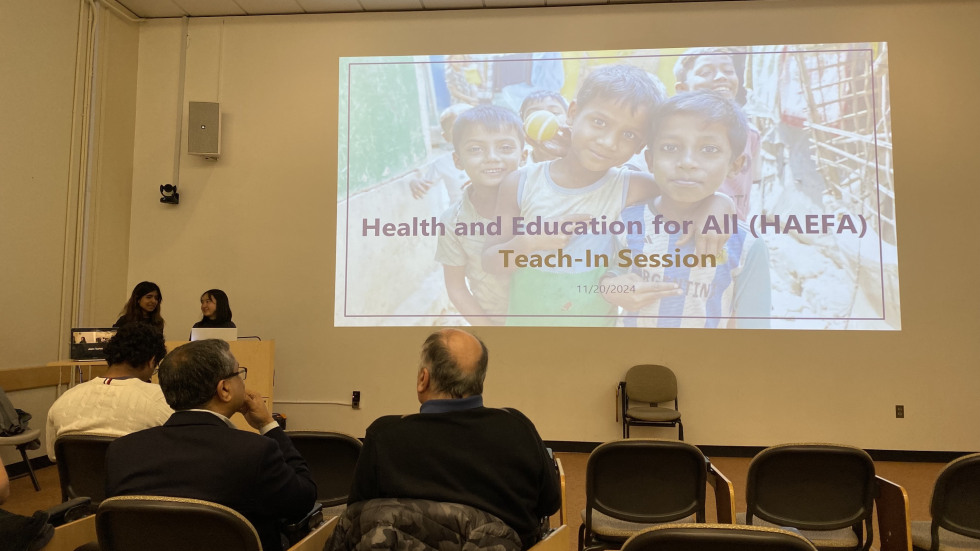
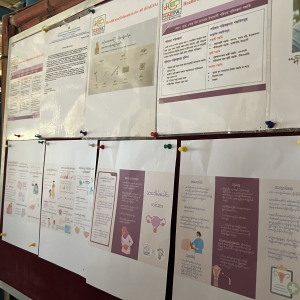
Global health activities can take many forms, whether big or small, and whether in your own community or abroad. I would encourage students to start with something small, even within their own community. I have done a lot of research, but my journey actually began by volunteering in my own neighborhood in Tokyo. That experience led me to volunteer in the Providence community, which eventually led me to HAEFA. It also doesn't have to be research. I've been involved with HAEFA in many different ways, from editing annual reports and conducting research to founding HAEFA@Brown, the student chapter of HAEFA. Through the student chapter, we organized events with guest experts to raise awareness of the Rohingya community at Brown, held fundraisers selling handmade Rohingya crafts, and created educational pamphlets about prevalent diseases in the camps, which I was able to deliver to the workers in the camps. There are so many ways to get involved. My advice is to start with something that interests you and focus on building a relationship with the community you hope to serve. What matters most is caring about the community, listening to their needs, and continually asking yourself how you can contribute. Even small actions can make a difference when you show commitment.

When applying to medical school, did you feel that your global health experiences helped you demonstrate why you want to study medicine?

I hope so! My global health experiences definitely solidified my commitment to medicine and reminded me who I want to work hard for. They reminded me that I am pursuing medicine not only because I enjoy advancing medical technologies in the lab or because I find surgery fascinating, but because there are children around the world for whom I want to help provide quality medical care and hope. 

The path to becoming a physician is not an easy one, but I always remember a 15-year-old boy I met in the Rohingya camp. He had to give up on his dream of becoming a doctor because he didn't have access to education. When he learned that we shared the same goal of becoming doctors, he cheered me on. His words remind me what a privilege it is to have the opportunity to pursue my dreams when he was forced to abandon his. I carry his story with me as a reminder of why I want to go into medicine. I hope to become a pediatric surgeon who can not only treat children but also expand access to medical technologies for children around the world.
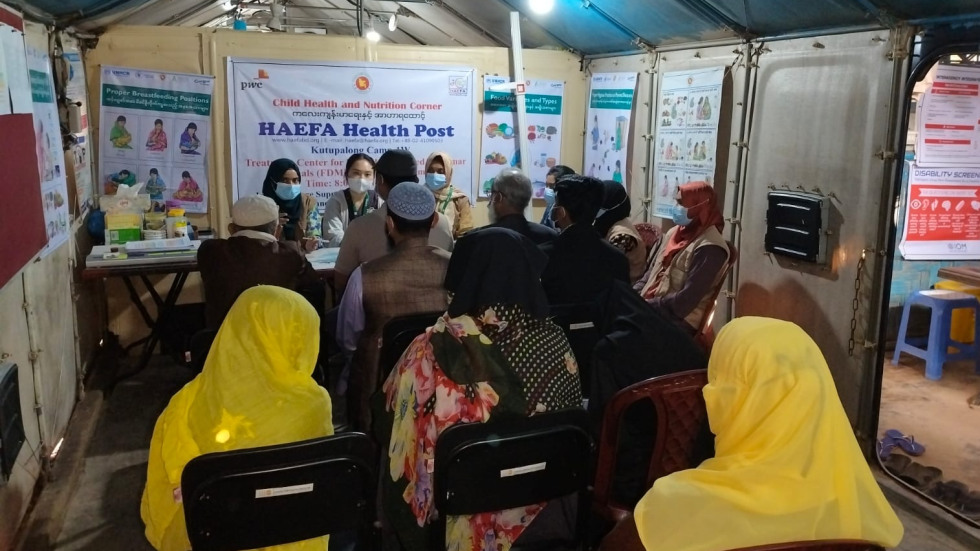
The Center for Global Health Equity wishes Yui the best of luck as she pursues her dream of becoming a pediatric surgeon!